Where to place the thermostat?
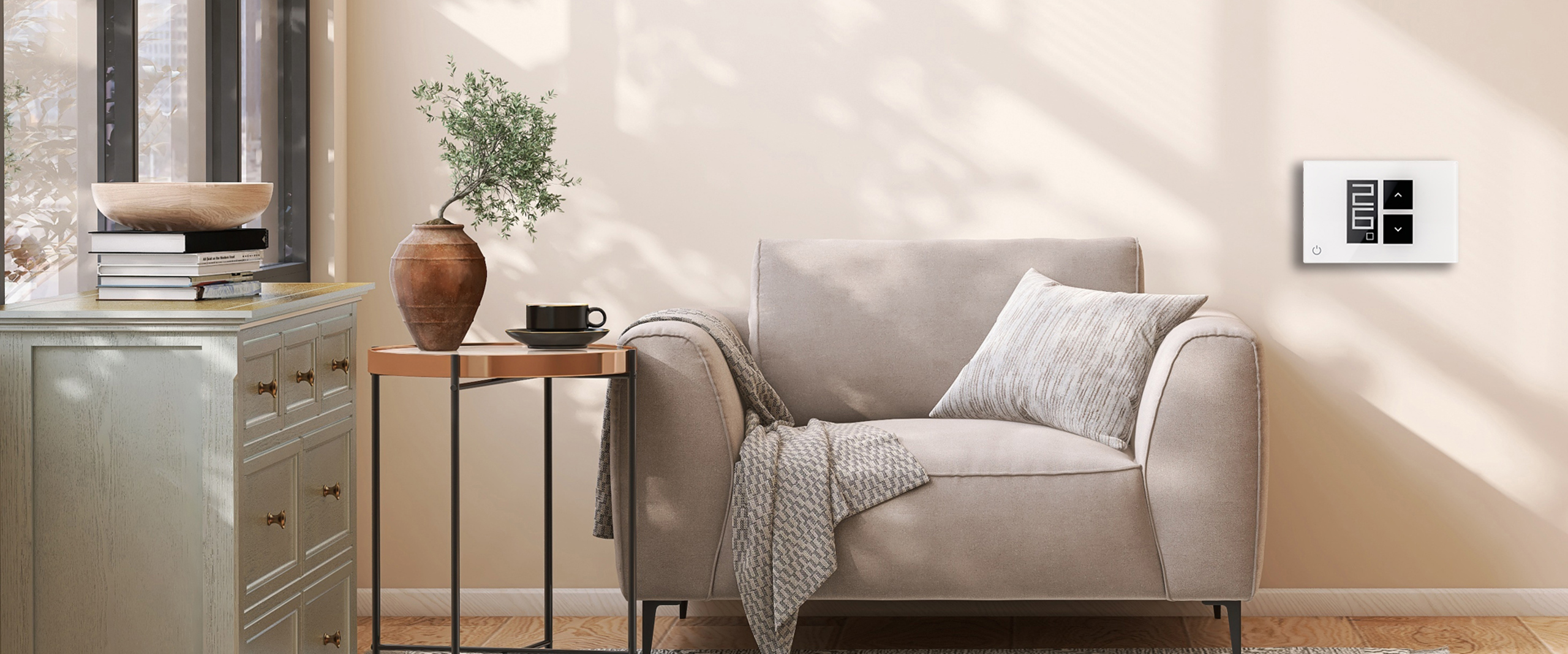
There are areas of the room more suitable than others for install a thermostat , or is one as good as the other? It seems like a trivial question, but in reality it is not. In fact, in fact, thermostats are still too often installed in the wrong places in homes, which affects their correct functioning. Let's see some precautions to take when installing a thermostat/chronothermostat.
Where to place the thermostat
Let's try to understand first what is the place to place the thermostat . Normally the device is installed in those that are most used rooms , such as the living room, since they are the warmest ones and in which we are most interested in maintaining the correct temperature. Assuming that the heating system in our home is not divided into zones, if we installed the thermostat in a little-used and therefore colder room, we would inevitably have an uncomfortable regulation of the room temperature. Then there are some general indications to take into consideration when choosing the installation location:
- Avoid proximity to heat sources, such as radiators, stoves, etc.
- Avoid direct exposure to sunlight.
- Avoid proximity to drafts or sources of cold air such as windows, doors, etc.
- Avoid particularly cold walls (thermal bridges).
- Finally, it is recommended to install the thermostat at a height of 1.5 m from the floor, to avoid staggered readings due to the fact that the cold air settles at the bottom.
All these cases lead to a alteration of the temperature detection by the thermostat , which has various negative effects, such as the delay or advance in turning off the heating, or the frequent switching on and off caused by sudden temperature changes caused, for example, by air currents.
I Seitron devices offer the possibility of adjusting the offset of the thermostat , precisely to overcome unfortunate installations, but it is good practice, if you proceed with an installation in a place where the connection is not already set up, to follow what is stated above.

Tips for installing the thermostat
One final consideration. Before choosing the new thermostat it is important check the type of power supply . In fact, installing a 230V thermostat can often involve additional work (and costs). Let's see the two cases in which we could find ourselves: replacement o installation ex novo .
In the case of replacement , if the new thermostat is battery operated we have no problems and the replacement can be done without worries (obviously subject to the compatibility of the dimensions). If the new thermostat is instead 230V, we will be able to quickly proceed with the replacement if the old one is also 230V, otherwise we will have to check that the two power cables in addition to the boiler consent cables are also present in the place used for installation. If not, we will have to provide the cabling.
However, when you carry out a installation from scratch , you must mainly worry about the presence or absence of the boiler's consent cables. In fact, if these are present in the place where you intend to install the thermostat, you can in any case opt for a battery-powered thermostat, if vice versa the consent cables are not present, you can choose a wireless solution that allows the thermostat to communicate via radio with a receiver positioned in the boiler, thus leaving maximum installation freedom.
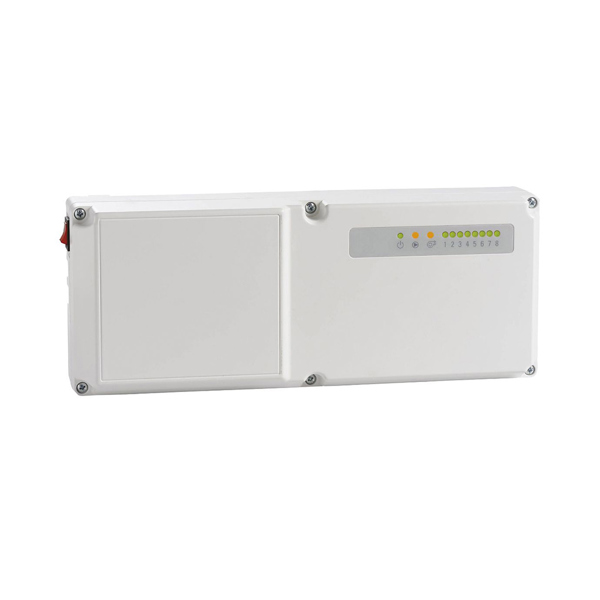
Examples of this type are our wireless chronothermostat kit , or the new battery-powered wifi chronothermostat hygge .