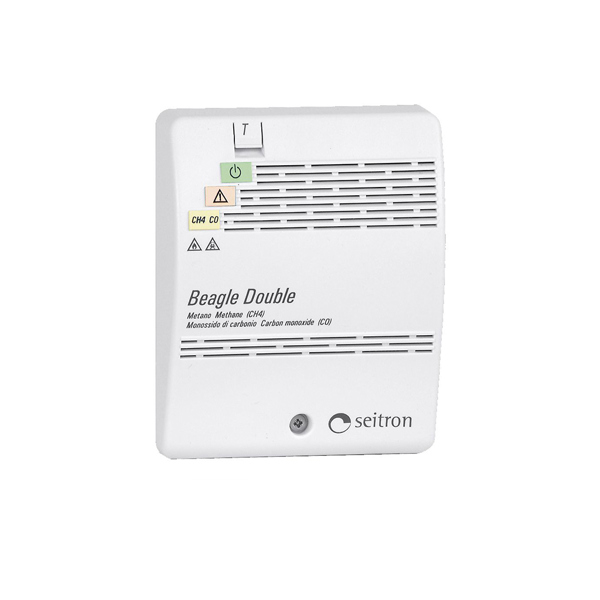
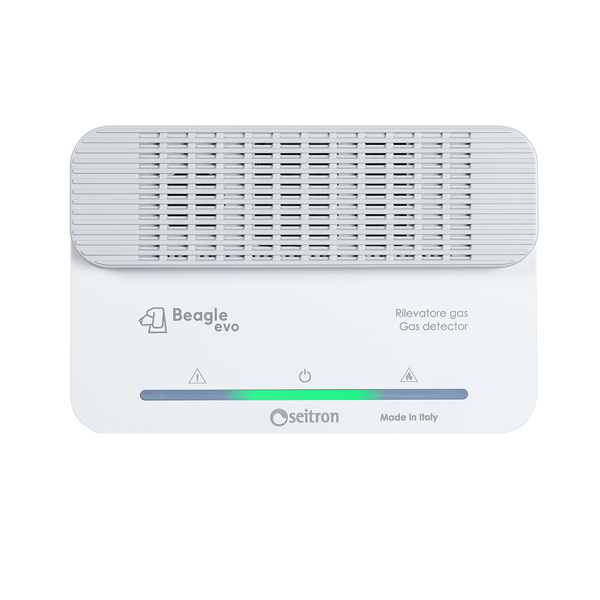
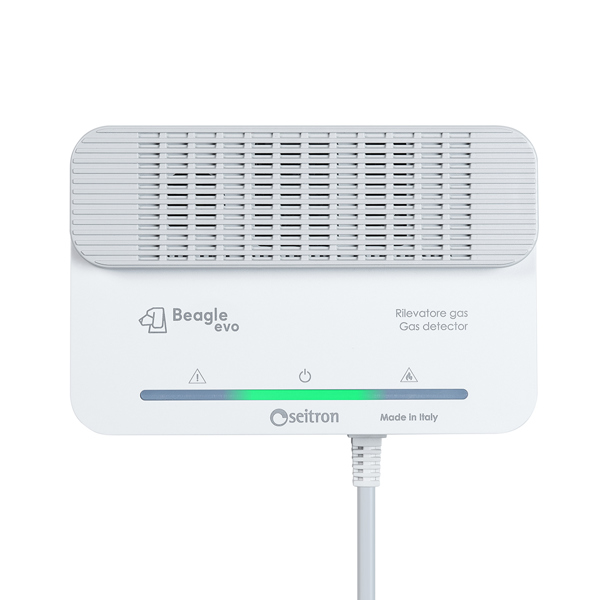
Gas Detector and Sensor: Everything you need to know
The heart of a gas detector is its sensor, in fact the accuracy of the detection depends on it. It is therefore essential to scrupulously respect the manufacturer's warnings regarding its expiry and replacement.
Gas detector: what it is and what it is used for
The gas detector is a very important device for home security and, although there is no legal obligation for its installation, it would still be good practice to install it at home as in some situations there could be a real lifesaving . For further information you can read the article: Why install a gas detector .
The operating principle is basically simple. The detector controls the concentration of gas in the air and, if a critical threshold is reached that could lead to explosion or health hazards (for further information read: What is LEL? ), activates an alarm and triggers a relay. The latter can be connected to a solenoid valve or to forced ventilation .
A good detector must always have these characteristics:
- Acoustic alarm
- Visual indication of the status: Correctly functioning - Fault - Danger
- Sensor self-diagnosis system
- Certification attesting compliance with UNI-EN standards on gas safety
Gas sensors and detector: how it works
The heart of a gas detector is made up of sensor . There are different types of gas sensors on the market (e.g. electrochemical, infrared, semiconductor), but their task is the same, i.e. translate the gas concentration into an electrical signal which can be interpreted by a microprocessor.
Given the crucial role of the sensor, it is immediately clear how its quality must be maximum to guarantee the effectiveness of the detector. Particular attention must therefore be paid to its maintenance.
Gas sensor life
Oh yeah, the sensor expires . On average the life of a gas sensor is 5 years since first powered. For this reason it is important to indicate the installation date on the instrument label, and remember to carry out the replacement in time .
In fact, after this period, the sensor is no longer considered reliable. Attempting to test a sensor with the use of lighters, flammable vapors, etc. should absolutely be avoided. as they can lead to wrong conclusions.
If the sensor has expired, it is necessary to replace it without hesitation, as it depends on your security .
Gas sensor cost: why is it high?
Surely if you have done any research on gas sensors for detectors, you will have noticed the high cost in proportion to that of the entire gas detector. In fact, they represent the majority of the cost of the latter, and moreover it is not surprising since they are the most important component : if the gas is not detected, the electronics that start the alarm and solenoid valve can do very little.
Therefore, faced with a complete gas detector that costs less than a replacement sensor , what should you think? The answer is very simple, you certainly saved on the sensor. So you save on reliability in detecting the presence of gas .
Also for this reason it is essential to check whether the devices are certified by a guarantor body such as IMQ .