Energy efficiency: because combustion analysis is the first step to saving.
To understand the importance of combustion analysis we must start from the basic principles of combustion itself, in particular the differences between perfect (stoichiometric), good and unsafe combustion.
We will also see the relationship between combustion efficiency and the safety and maintenance of the systems.
- Combustion and the meaning of unburned fuel
- Why monitor hydrocarbons?
- Perfect combustion (stoichiometric)
- Good combustion
- Unsafe combustion
- Combustion analysis: monitor combustion and safety
Combustion occurs when oxygen (O2) reacts with the fuel and produces energy in the form of usable heat along with CO2 and H2O. Of course, the energy generated can be utilized for a broad variety of uses, depending on the context in which it is produced.
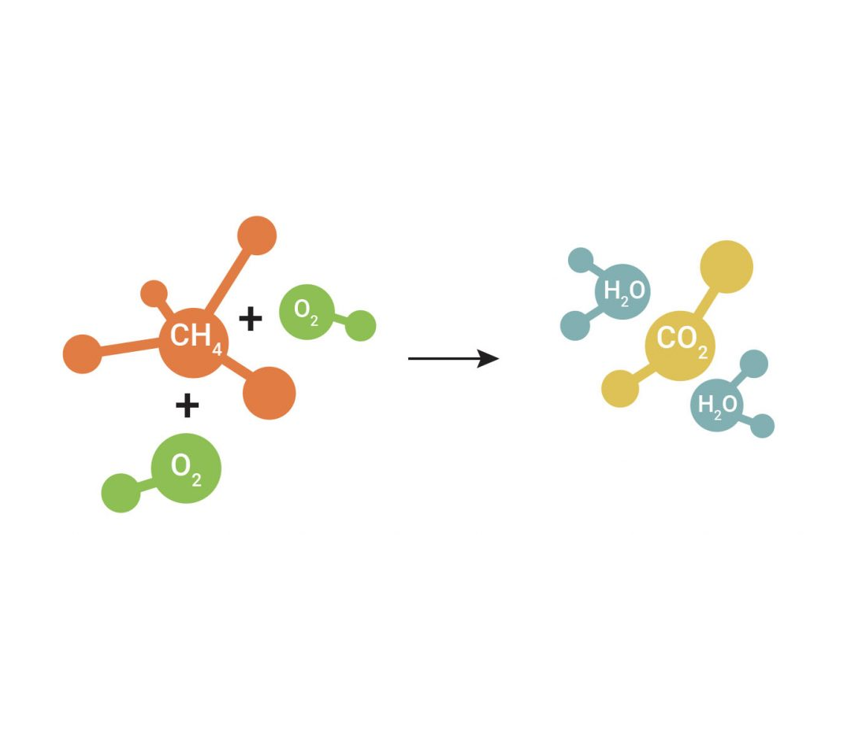
Hydrocarbon emissions are therefore, as we have seen, crucial in establishing the quality of combustion and whether a system is safe or needs immediate intervention, based on whether there is perfect, good or unsafe combustion.
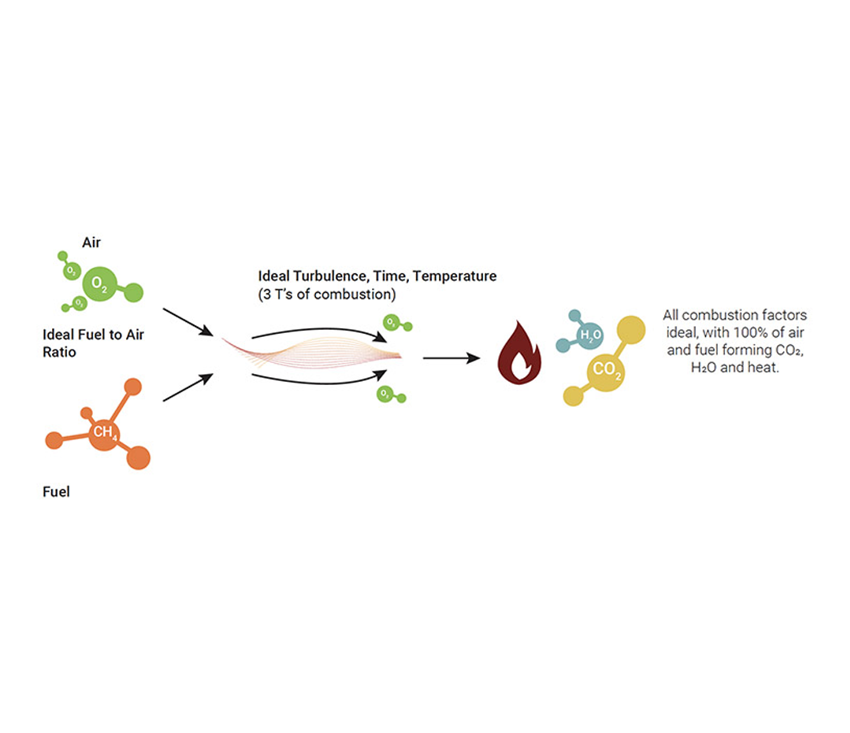
Perfect combustion occurs when the ideal air/fuel ratio is achieved within a system, so as not to produce any waste whilst extracting ALL the energy that the fuel can offer. Even if this type of combustion cannot be realistically obtained, understanding the conditions within which it could occur is useful when striving to improve the performance of a boiler/furnace/heater (or of a burner in general). So, let’s look at the factors that contribute to perfect combustion.
The factors for perfect combustion include:
- An ideal air/fuel ratio, thus the measured and constant supply of air and fuel
- A perfectly-designed burner and combustion process in excellent condition
- Constant characteristics of the fuel
- Ideal turbulence
- Ideal temperature
- Ideal time
- Ideal draft
Assuming these ideal parameters have been achieved, the oxygen and fuel is introduced into a perfectly-functioning burner. As a consequence, the consumption of air and fuel is 100% efficient and CO₂, H₂O and heat is produced without any combustion waste. We understand this is hypothetical and not possible.
Good combustion occurs when all the factors at play are close to ideal :
- Correct and relatively constant air/fuel ratio
- The burner is kept in good condition following the manufacturer's instructions
- The fuel characteristics are relatively constant
- Turbulence and draft are close to optimal
Under these conditions, air and fuel combine to form water (H2O), carbon dioxide (CO2) and heat, with CO emissions not exceeding 100 ppm. The system uses almost 100% of the fuel with almost zero emission of hydrocarbons, thus maximizing combustion efficiency.
Unsafe, or poor, combustion occurs when there are drops in efficiency due to wear of the appliances, or malfunctions, which overall lead to loss of energy, unburned fuel, excessive emissions. The first sign of this condition is the emission of hydrocarbons, which are the indicator of the inefficiency of the burner and the need for immediate inspection and maintenance interventions.
Factors of inefficient combustion:
- Unstable air/fuel ratio
- Defective burner
- The characteristics of the fuel are not constant
- Inadequate turbulence and improper mixing of air and fuel
- Not ideal draft
In these conditions air and fuel give rise to water (H2O), carbon dioxide (CO2) and heat, with the additional production of monoxide (CO) above 100 ppm and a significant amount of hydrocarbons (CxHy) in the form of unburned fuel.
The maximum maintenance efficiency is defined as the performance of a combustion process that occurs as good combustion in a device that works as designed by the manufacturer (there are no defects, damage, etc.).
As is evident, the safety of a system is closely linked to the efficiency of maintenance, in fact old, deteriorated, corroded or broken components lead to an increase in risks and loss of boiler performance. To avoid this situation, it is therefore essential to:
- Carry out the maintenance required by the manufacturer and by law
- Carefully monitor the gases associated with combustion, including the amount of excess O2 needed to achieve good combustion, as well as carbon monoxide (CO) and hydrocarbon emissions.
Precisely because of the importance and cruciality of maintenance, it is essential for a boiler technician to equip himself with the right tools to allow him to carry out combustion analysis in a fast and precise manner to guarantee customers the efficiency , safety and productivity of their system.
Seitron combustion analyzers, such as the Chemist 100 Be Green and the Novo, were created precisely to meet this need. These are portable analyzers capable of measuring all the parameters and gases necessary to optimize combustion and monitor the "state of health" of the boiler, such as O2, CO, hydrocarbons, gas pressure, draft, leakage, combustion efficiency. It is also possible to monitor ambient CO and differential pressure. Added to this is the speed and professionalism of the Seitron assistance service.